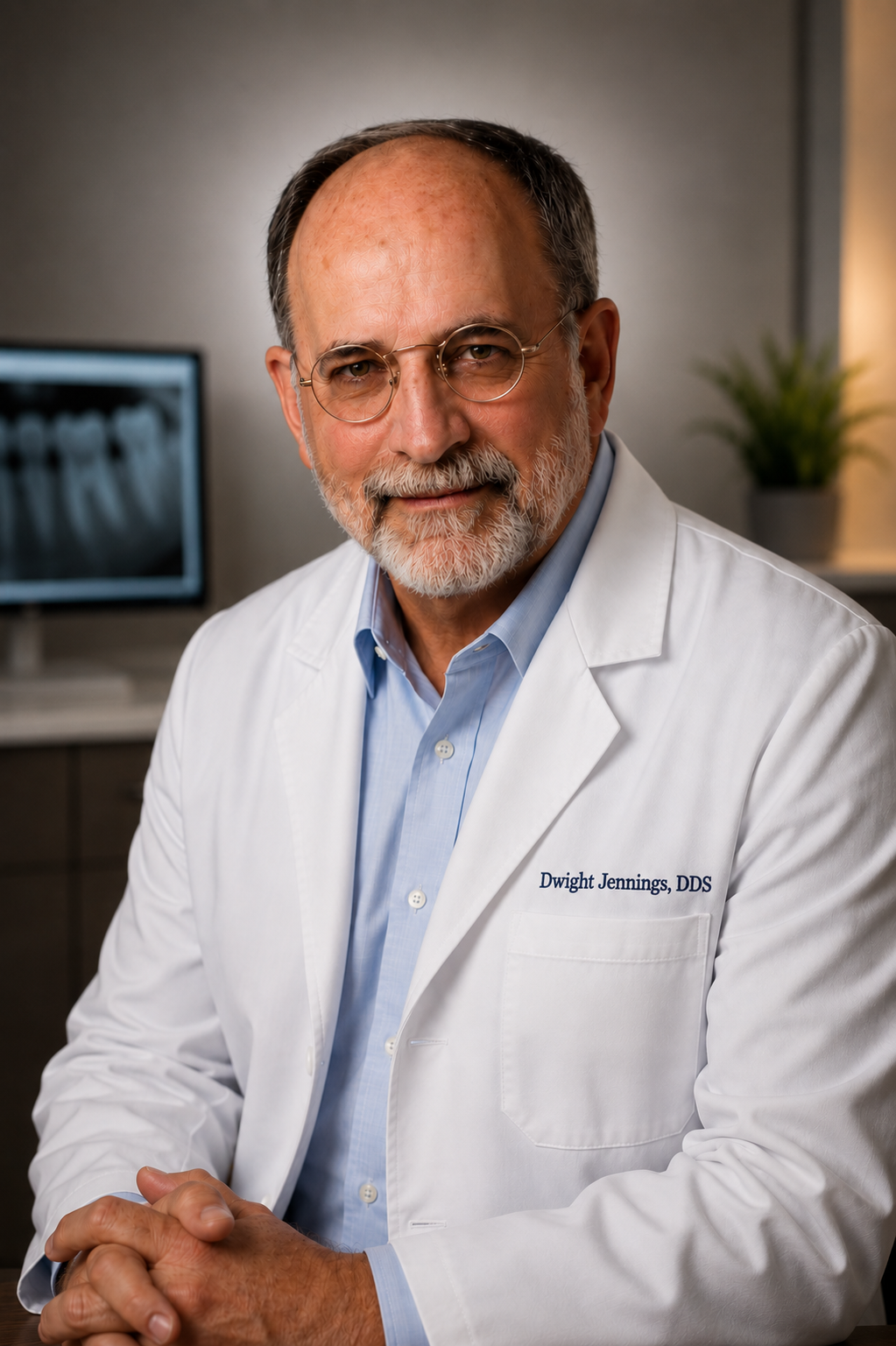
For 40 years, Dr. Dwight Jennings has helped patients with chronic pain, migraines, sleep apnea, and unexplained medical conditions find relief through a non-surgical approach mainstream medicine has overlooked.
Multiple research studies have shown that TMJ — temporomandibular joint dysfunction — is associated with a startlingly long list of comorbidities: chronic headaches, fibromyalgia, fatigue, sleep disorders, even movement disorders like Tourette's and Parkinson's. Patients with bite issues have markedly higher medical utilization rates than the general population.
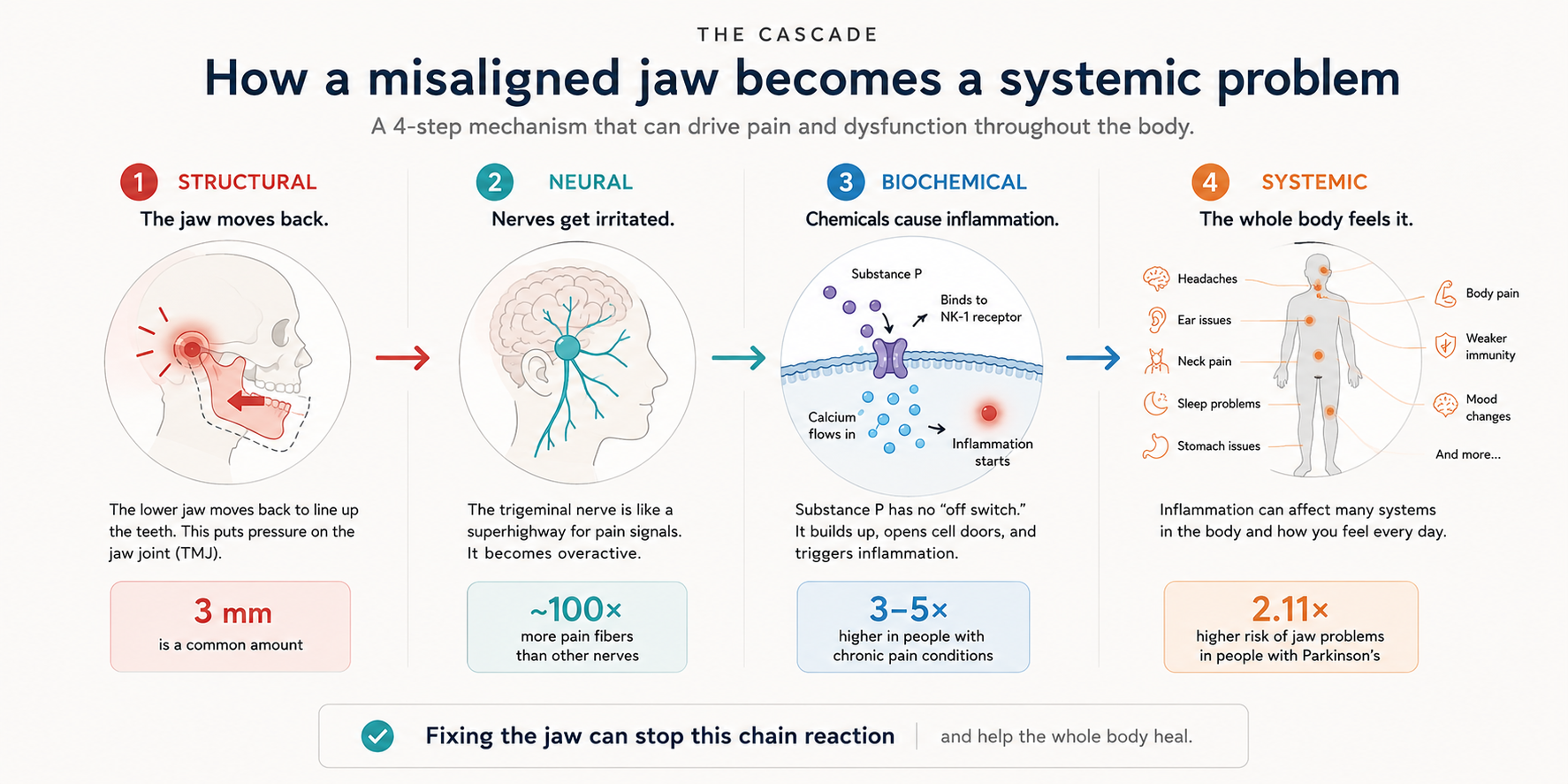
The mechanism is now well-documented. Jaw misalignment elevates trigeminal nerve activity, which in turn increases substance P — a neuropeptide that, when chronically elevated, sensitizes cell membranes throughout the body and disrupts normal function across multiple systems. The trigeminal nerve has on average 100 times more dense pain fibers than any other nerve in the body. When it's chronically activated, the consequences ripple outward.
Dr. Jennings has spent four decades developing the diagnostic and treatment protocols this work requires. The treatment itself is undramatic — a removable dental appliance, almost never surgery, that aligns the jaw and relieves the pressure on the joint. The results, for the right patients, can be transformative.
If any of these describe you — or someone you've been trying to help — start here.
Jaw pain, clicking, locking, ear pressure, facial pain. The original specialty of the practice — and where most patients begin.
Learn moreBite alignment therapy is shown in multiple studies to be 85% effective at reversing chronic headaches — regardless of headache type.
Learn moreAdvanced obstructive sleep apnea treatment based on dental orthopedics — for patients who can't tolerate or aren't well-served by CPAP.
Learn moreTourette's, Parkinson's, dystonia, torticollis, and gait disorders have been reversed in cases through craniomandibular alignment therapy.
Learn moreMany cases recommended for orthognathic surgery or TMJ surgery can be treated nonsurgically with precision jaw orthopedics.
Learn moreFibromyalgia, IBS, autoimmune conditions, depression, ADD, autism, and the long list of conditions linked to substance P dysregulation.
Learn more
A general dentist for ten years before specializing in jaw orthopedics, Dr. Jennings has spent the last four decades developing diagnostic protocols and treatment innovations that are now reshaping how the field understands the connection between jaw function and systemic health.
His original research on the substance-P cascade, the trigeminal system, and the mechanism by which jaw dysfunction drives systemic illness has been published in journals including Cranio and TMDiary. He is a Master of the International College of Cranio-Mandibular Orthopedics (MICCMO).
Read his full storyA man in his mid-sixties had a history of fainting when he walked uphill. He had been examined by multiple physicians and undergone X-rays, MRI, and EKG with no abnormal findings. In a phone interview, he mentioned that before he passed out he would develop pain in his ankles, knees, and hips — a sign that there was possibly a trigeminal nerve component to his fainting.
A small sample. The full set of patient stories is on the Conditions pages and grows continuously.
Down to four hours of sleep a night. Sleep apnea from teenage braces that retruded the lower jaw. Severe chemical sensitivity — couldn't tolerate rubbing alcohol. Every lab test normal. The first night with the splint, eight hours like a baby. Two years to fully recover.
Chronic fatigue syndrome with severe hypersensitivity. Couldn't tolerate perfume. Felt wind inside her head on windy days — to the point of needing to lie down with pillows around her head. Years later, those days no longer affect her. Her son was treated separately for sleep apnea, recurrent ear and sinus infections, and a toed-in foot.
Eighty-three years old. Wet macular degeneration. Photodynamic therapy nine times, around-the-eye laser treatment 150+ times per side, radiation in one eye. The bleeding wouldn't stop. Six months of jaw orthopedic treatment with Dr. Jennings, and the bleeding and leakage stopped. Vision didn't return — but the deterioration stopped.
Drawn from publicly recorded patient remarks. To be confirmed and re-consented before publication on the live site.
If you're a physician, dentist, or neurologist with a patient whose presentation doesn't add up, the trigeminal–substance P axis may be worth investigating. The framework is built on textbook neuroscience and a growing peer-reviewed evidence base. Citations and the referral pathway are on the Research page.
Research & referralsThe body has very few ways of registering distress. When the trigeminal-substance P axis is dysregulated by jaw misalignment, that distress shows up wherever each person is most vulnerable — the head, the joints, the gut, the nervous system. These are the conditions we see most often.

Temporomandibular joint dysfunction occurs when the jaw is misaligned, causing compression of the joint when biting down. The result is often pain — but TMJ is properly described as a syndrome, a constellation of symptoms that can include headaches, ear pressure, sinus pain, eye pain, neck pain, and visual disturbances. Treatment with a properly designed appliance to realign the jaw resolves most cases without surgery.
Chronic headaches are caused, in most cases, when the nerve endings around the brain become hypersensitized and are then triggered by ordinary sensory stimulation — light, noise, stress, lack of sleep. The hypersensitization is usually caused by a lifelong poor bite. Multiple studies have shown that bite alignment therapy is approximately 85% effective at reversing chronic headaches, regardless of headache type.
Obstructive sleep apnea is often a structural problem of jaw position. When the jaw is retruded, the airway behind the tongue is compromised. Advanced jaw-orthopedic treatment can change the structural relationship and resolve apnea in many patients — particularly those who cannot tolerate CPAP or are looking for an alternative based on integration of medical history and overall health status.
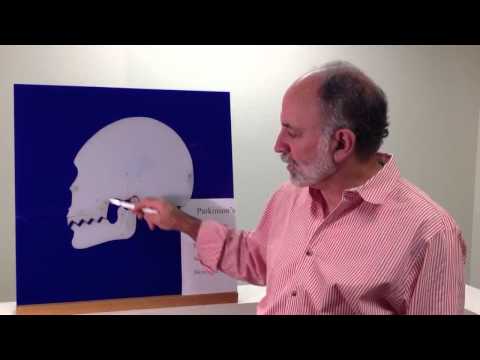
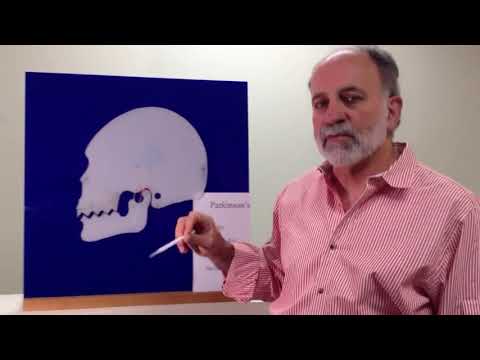
Tourette's, Parkinson's, torticollis, dystonia, scoliosis, gait disorders, and tics have all been reversed in clinical cases by craniomandibular alignment therapy. The mechanism is twofold: jaw alignment sensors have massive representation in the reticular formation (where movement originates), and substance P — elevated by jaw dysfunction — is a direct modulator of movement.
Through advanced jaw-orthopedic techniques, Dr. Jennings is able to treat many cases nonsurgically that have been recommended for orthognathic surgery or TMJ surgery. Our primary treatment is with removable dental appliances. With these, we can align the jaw and teeth and resolve many medical complaints. Traditional braces are sometimes used at the end to finish the case.
The list of conditions clinically associated with jaw dysfunction is long: asthma, autoimmune disorders, depression, fatigue, fibromyalgia, IBS, multiple chemical sensitivity, MS, ADHD, periodontal disease, seizures, sinus infections, trigeminal neuralgia, autism, and more. Not every case is jaw-driven, but for the patient who has run out of answers, the bite is worth a careful look.
Dwight Jennings, DDS, MICCMO, has built one of the most specialized practices in the country around a single observation: that the jaw, properly understood, is a window into systemic health.
Dr. Jennings practiced general dentistry for ten years before narrowing his focus to dental orthopedics — the assessment and correction of jaw alignment. The practice he founded in 1986, the Northern California Cranio-Facial Diagnostic Center, operates from Alameda in the San Francisco Bay Area, with a second location in Sutter Creek.
It functions as a tertiary referral practice. A significant percentage of patients travel more than 50 miles, and many fly into Oakland International Airport — five minutes from the office — from across the country.
Dr. Jennings was born in the San Joaquin Valley and grew up on a farm in the Ozarks of Missouri, where he learned the value of a hard day's work and the virtue of honesty. He returned to California at fifteen to finish high school in Manteca, then graduated from the University of the Pacific in Stockton and attended their dental school in San Francisco.
In his spare time, Dr. Jennings enjoys construction projects, gardening, blacksmithing, and art projects — the same hands-on instincts that shape how he thinks about jaw mechanics.
Mainstream dentistry, Dr. Jennings argues, is built on a structural model of the bite — the textbook "class I occlusion" — without an adequate functional model of what an ideal bite actually does. That gap is why most dentists have never been trained to recognize the jaw as a possible source of headaches, sleep apnea, or movement disorders.
It's also why the same practitioners charged with assessing the jaw — orthodontists — often miss what is in front of them. The American Dental Association renamed orthodontists "orthodontic and dento-facial orthopedic specialists" in 1998, but did not change their educational requirements. The title changed; the curriculum didn't.
Dr. Jennings has spent his career developing the protocols this functional understanding requires.
Beyond practice, Dr. Jennings has developed a series of new diagnostic and treatment protocols — including innovations in functional testing, appliance design, and the integration of bite work with broader medical history — that have meaningfully improved outcomes in jaw dysfunction and related muscle disorders.
His paper A New Model of Occlusion proposes a functional reframing of how the bite should be understood and assessed. Other published work covers the substance-P cascade, the trigeminal system, fibromyalgia, autism spectrum, and the perils of conventional orthodontics. He holds the Master designation (MICCMO) from the International College of Cranio-Mandibular Orthopedics.
Browse the researchThe primary treatment in this practice is a removable dental appliance — a precisely fitted device that adjusts the jaw's position so that the joint is no longer under compression. Functional tests, based on dental orthopedic principles, are run to identify defects that are not always evident on X-rays. Appliances are then modified and adjusted iteratively until function is ideal and symptoms resolve.
Dr. Jennings has, over the course of his career, treated many cases nonsurgically that had been recommended for orthognathic or TMJ surgery. Traditional braces are used in some instances at the end of treatment to finish a case. Surgery is rare.
For physicians, dentists, neurologists, and curious patients: the published work, the proposed mechanism, and the case for considering jaw orthopedics in complex chronic illness.
Dentistry's current understanding of occlusion is structural — built around the textbook "class I" relationship of teeth. But structure and function are not the same thing. This paper proposes a functional model of occlusion grounded in jaw orthopedic principles, with implications for how clinicians evaluate, diagnose, and treat the dysfunctions that follow from a poor bite.
Read the paper (PDF)The peer-reviewed evidence base that links jaw dysfunction to systemic illness has expanded substantially in the last two decades. Some of it sits comfortably in the mainstream — the role of substance P in inflammatory disease, the trigemino-vascular system as the established mechanism of migraine, the documentation of polymodal C-fiber nociceptors as the substrate of chronic pain. These are textbook neuroscience.
Other findings are newer and more specific. A 2019 population-based study of nearly 25,000 Taiwanese patients found that temporomandibular disorder was 2.11 times more prevalent in Parkinson's patients than in matched controls — rising to 4.25 times in the first year after Parkinson's diagnosis. The standard interpretation of that finding is that Parkinson's pathology damages the jaw. Dr. Jennings has spent decades developing the clinical hypothesis that, for many of these patients, the jaw dysfunction came first.
The Research page below collects the literature this practice is built on — both the well-established mechanisms and Dr. Jennings' own original work. PMIDs and DOIs are linked where available. PDFs of unpublished and out-of-print papers are available on request.
Figures drawn from the peer-reviewed and clinical literature cited below.
A four-step cascade. The first three steps are established neuroscience; the fourth maps to Dr. Jennings' clinical observation.
A vertical-height deficiency — often inherited, often worsened by extraction-based orthodontics — forces the lower jaw to retrude to bring the teeth together. The TMJ is compressed. The chewing muscles (especially the temporalis) work continuously to hold the jaw in a non-resting position.
Chronic muscle and joint irritation activates the trigeminal nerve — the body's densest concentration of nociceptive C-fibers. C-fibers release substance P, a neuropeptide with no reuptake mechanism. It accumulates and lingers.
Substance P binds the NK-1 receptor, opens cell membranes, lowers cell voltage, and allows calcium influx. It is established as a primary driver of inflammatory disease in the respiratory, gastrointestinal, and musculoskeletal systems (J Cell Physiol, 2004).
Sustained substance P elevation correlates clinically with the conditions Dr. Jennings sees most often: chronic headaches, fibromyalgia, IBS, autoimmune disorders, sleep apnea, movement disorders, mood and addiction syndromes, and a broader pattern of "complex chronic illness." Whether substance P is causal or only correlative in each is an active research question — but the clinical observation is what the practice was built on.
The non-controversial mechanism papers. If you're a clinician reading the framework for the first time, start here.
Substance P — the neuropeptide at the center of Dr. Jennings' framework — is the subject of a comprehensive 2024 reference textbook from Elsevier covering its biology, pharmacology, and clinical implications across the systems Dr. Jennings' patients present with.
We keep a copy in the clinic. Referring clinicians can request relevant citations.
Forty years of clinical observation, mechanism papers, and case-series writing — recovered from his publication archive. PDFs below open in a new tab.
Research by other clinicians and investigators that bears directly on the framework — particularly the movement-disorder reversal series. Listed as citations for reference; we don't host third-party PDFs but PubMed links are provided where indexed.
We try to be honest about which of Dr. Jennings' claims are uncontroversial textbook neuroscience and which are his own clinical hypothesis. Both have a place — the textbook claims are the foundation; the clinical hypothesis is what makes the practice unique. The two should not be conflated.
What is well-established: the trigeminal nerve as the densest source of nociceptive C-fibers in the body; substance P as a pro-inflammatory neuropeptide implicated in asthma, IBD, rheumatoid arthritis, fibromyalgia, and migraine; the trigemino-vascular system as the established mechanism of migraine; polymodal C-fiber nociceptors as the substrate of chronic pain; capsaicin as a substance-P depleter (the basis of topical capsaicin pain creams); the neural crest as the embryological origin of the front teeth, autonomic nervous system, and pigment cells; the 2.11× elevated rate of TMD in Parkinson's patients in the largest peer-reviewed study to date.
What is Dr. Jennings' clinical hypothesis: that for many patients in the complex-chronic-illness population — fibromyalgia, sleep apnea, movement disorders, neurodegeneration, even some cancers — the bite came first and is therefore worth a careful look. This framework is supported by his forty years of clinical observation and by the peer-reviewed literature on substance P and the trigeminal system, but the specific causal direction (bite dysfunction → systemic disease, rather than the reverse) has not been established by controlled trials in the patient groups he treats. We present the framework confidently because it has held up in his clinical practice for four decades. We don't claim it has the same evidentiary weight as a Phase III drug trial.
If you're a clinician with a patient who hasn't responded to mainstream care, the framework is worth taking seriously. If you're a researcher with the resources to test it in controlled studies, Dr. Jennings would welcome the collaboration.
Dr. Jennings reviews referrals personally. The first response is typically within a few business days — an honest read on whether the case is one we can help with. If we're not the right place, we'll say so and where possible suggest a closer specialist.
For specialists outside the Bay Area, the two organizations below maintain directories of clinicians trained in this work.
Refer a patientLong-form interviews and short clips where Dr. Jennings explains the framework, the trigeminal cascade, and what forty years of clinical practice has taught him about the bite.
1:03:28
56:31
59:00
1:23:09
1:57:59
42:25
44:40
54:04
40:46
33:32
28:01
5:30
3:55
6:21
3:06
3:54
Looking for more? Dr. Jennings publishes on his own channel at @dentalphysician.
Most consultations begin with a phone call or a brief written description of your situation. We'll review and tell you honestly whether jaw orthopedics is worth exploring for you, and what a first visit would involve.
A meaningful share of our patients fly in from across the country. We can help you plan a multi-day visit and coordinate diagnostic work efficiently. Mention this in your inquiry and we'll send a travel guide.
Phone or written intake. Dr. Jennings personally reviews each inquiry and tells you honestly whether your case is a fit. No charge for this step.
In-person evaluation that includes a detailed history, functional testing, and imaging where appropriate. Goal: understand what is and isn't jaw-driven.
If we proceed, treatment typically begins with a custom appliance and is adjusted iteratively. Most cases avoid surgery entirely.