Specialist Dental Medicine

When the medical system can't explain your symptoms, the answer may be in your jaw.

For 40 years, Dr. Dwight Jennings has helped patients with chronic pain, migraines, sleep apnea, and unexplained medical conditions find relief through a non-surgical approach mainstream medicine has overlooked.
Dr. Jennings' practice — Northern California Cranio-Facial Diagnostic Center
“Patients fly into Oakland from across the country because there are very few practices in the world doing this work.” — Dr. Jennings
The hypothesis

What if the cause of your symptoms isn't where doctors have been looking?

Multiple research studies have shown that TMJ — temporomandibular joint dysfunction — is associated with a startlingly long list of comorbidities: chronic headaches, fibromyalgia, fatigue, sleep disorders, even movement disorders like Tourette's and Parkinson's. Patients with bite issues have markedly higher medical utilization rates than the general population.

The mechanism is now well-documented. Jaw misalignment elevates trigeminal nerve activity, which in turn increases substance P — a neuropeptide that, when chronically elevated, sensitizes cell membranes throughout the body and disrupts normal function across multiple systems. The trigeminal nerve has on average 100 times more dense pain fibers than any other nerve in the body. When it's chronically activated, the consequences ripple outward.
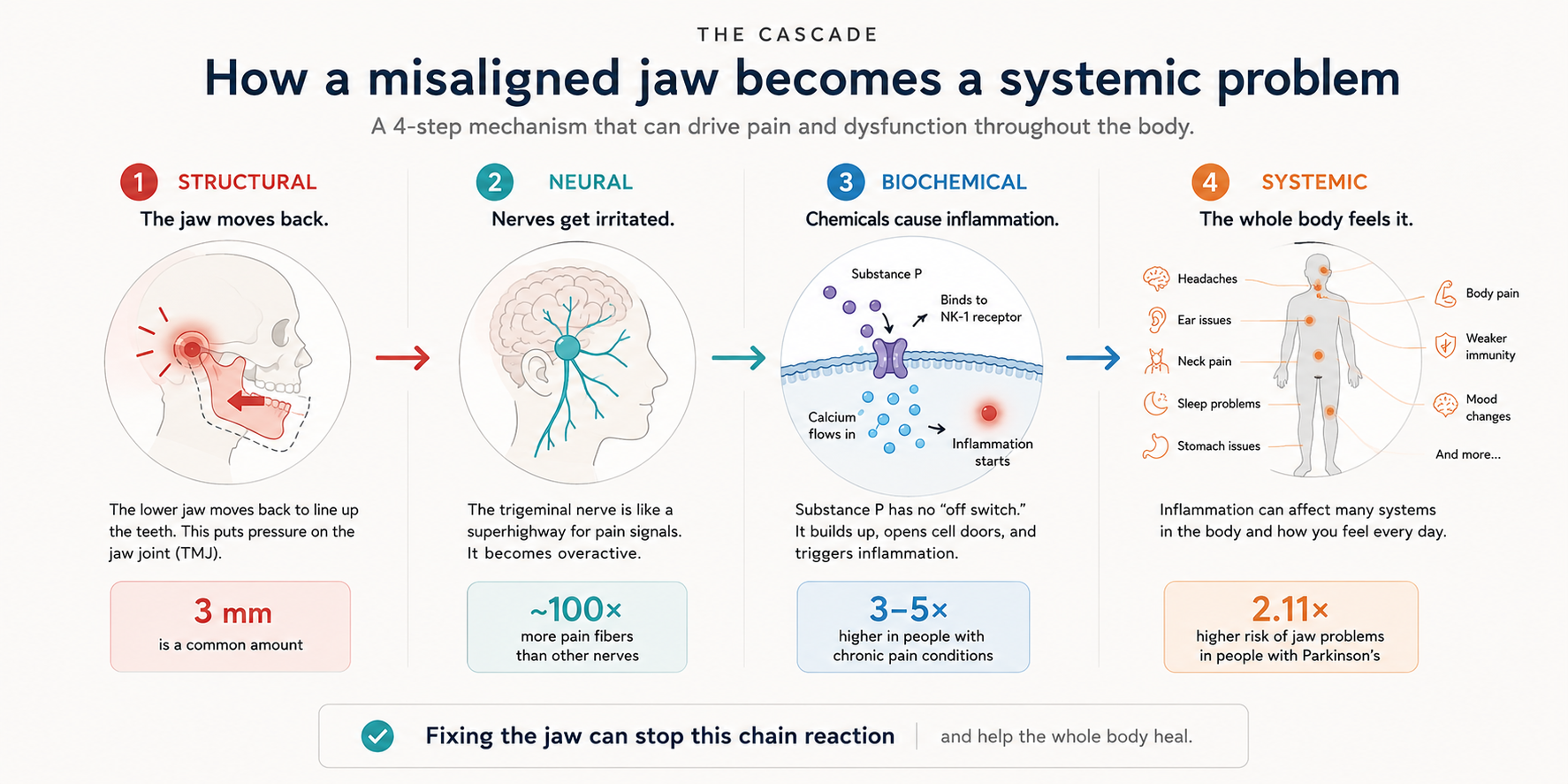
A four-step cascade diagram showing how a misaligned jaw can drive pain and dysfunction throughout the body: structural jaw retrusion, neural irritation, biochemical inflammation, and systemic effects.
The four-step cascade. See the full neurology →
“Curiously, I have never heard a single physician mention the idea of looking at the bite on patients having broad medical complaints.”

Dr. Jennings has spent four decades developing the diagnostic and treatment protocols this work requires. The treatment itself is undramatic — a removable dental appliance, almost never surgery, that aligns the jaw and relieves the pressure on the joint. The results, for the right patients, can be transformative.

Conditions we treat

Six entry points into the same body of work

If any of these describe you — or someone you've been trying to help — start here.

T

TMJ pain & dysfunction

Jaw pain, clicking, locking, ear pressure, facial pain. The original specialty of the practice — and where most patients begin.

Learn more
H

Chronic headaches & migraines

Bite alignment therapy is shown in multiple studies to be 85% effective at reversing chronic headaches — regardless of headache type.

Learn more
S

Sleep apnea

Advanced obstructive sleep apnea treatment based on dental orthopedics — for patients who can't tolerate or aren't well-served by CPAP.

Learn more
M

Movement disorders

Tourette's, Parkinson's, dystonia, torticollis, and gait disorders have been reversed in cases through craniomandibular alignment therapy.

Learn more
A

Surgical alternative

Many cases recommended for orthognathic surgery or TMJ surgery can be treated nonsurgically with precision jaw orthopedics.

Learn more
C

Complex & undiagnosed

Fibromyalgia, IBS, autoimmune conditions, depression, ADD, autism, and the long list of conditions linked to substance P dysregulation.

Learn more
Why patients travel

A practice unlike any other

40+
years of full-time specialization in dental orthopedics — almost no one in the U.S. has this depth
50+
miles is the median distance patients travel; many fly into Oakland from across the country
95%
of TMJ cases respond to jaw repositioning rather than psychotherapy or stress management, in our clinical experience
~0%
of treatment plans involve surgery — the primary therapeutic is a removable dental appliance
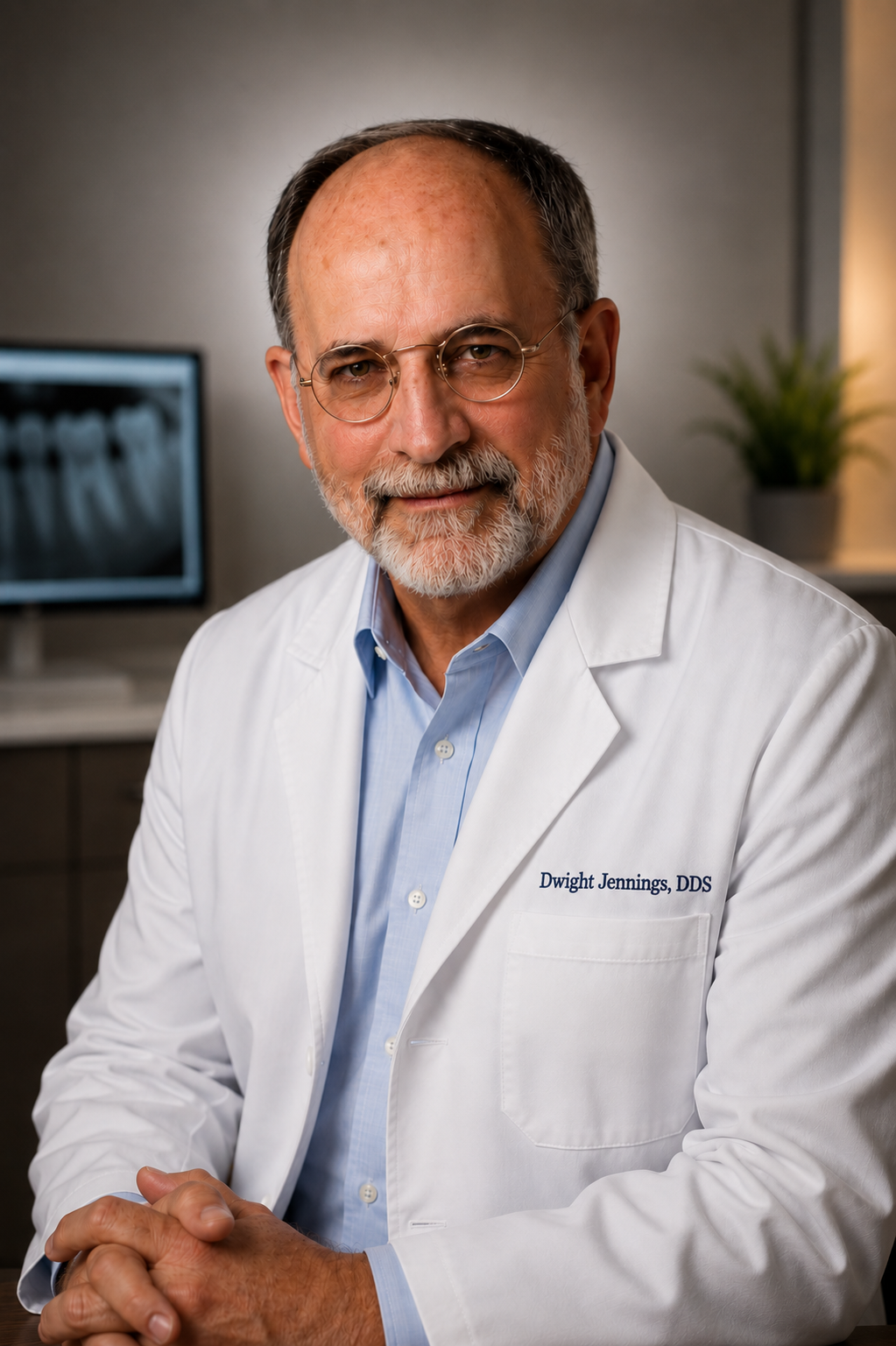
Dr. Dwight Jennings, DDS
Meet the doctor

Dr. Dwight Jennings, DDS, MICCMO

Northern California Cranio-Facial Diagnostic Center · Established 1986

A general dentist for ten years before specializing in jaw orthopedics, Dr. Jennings has spent the last four decades developing diagnostic protocols and treatment innovations that are now reshaping how the field understands the connection between jaw function and systemic health.

His original research on the substance-P cascade, the trigeminal system, and the mechanism by which jaw dysfunction drives systemic illness has been published in journals including Cranio and TMDiary. He is a Master of the International College of Cranio-Mandibular Orthopedics (MICCMO).

Read his full story
Case history

The kind of patient who finds us

Fainting on uphill walks. Multiple physicians. Normal X-rays, MRI, EKG.

A man in his mid-sixties had a history of fainting when he walked uphill. He had been examined by multiple physicians and undergone X-rays, MRI, and EKG with no abnormal findings. In a phone interview, he mentioned that before he passed out he would develop pain in his ankles, knees, and hips — a sign that there was possibly a trigeminal nerve component to his fainting.

On examination, observation showed a very large jaw misalignment caused by orthodontic extraction therapy when he was a teenager. A 4mm tall mouthpiece was made for him which gave him immediate relief. He reported a significant improvement in memory within about one week.
In their own words

What patients say after the work is done.

A small sample. The full set of patient stories is on the Conditions pages and grows continuously.

Down to four hours of sleep a night. Sleep apnea from teenage braces that retruded the lower jaw. Severe chemical sensitivity — couldn't tolerate rubbing alcohol. Every lab test normal. The first night with the splint, eight hours like a baby. Two years to fully recover.

"I feel better now than I have felt in my entire life."

Chronic fatigue syndrome with severe hypersensitivity. Couldn't tolerate perfume. Felt wind inside her head on windy days — to the point of needing to lie down with pillows around her head. Years later, those days no longer affect her. Her son was treated separately for sleep apnea, recurrent ear and sinus infections, and a toed-in foot.

"In three days he walked straight. He no longer snores. He hasn't had an ear infection since."

Eighty-three years old. Wet macular degeneration. Photodynamic therapy nine times, around-the-eye laser treatment 150+ times per side, radiation in one eye. The bleeding wouldn't stop. Six months of jaw orthopedic treatment with Dr. Jennings, and the bleeding and leakage stopped. Vision didn't return — but the deterioration stopped.

"Nothing I'd tried in twenty years had been as effective as the treatment with Dr. Jennings."

Drawn from publicly recorded patient remarks. To be confirmed and re-consented before publication on the live site.

For referring clinicians

A scientific basis, not a hunch.

If you're a physician, dentist, or neurologist with a patient whose presentation doesn't add up, the trigeminal–substance P axis may be worth investigating. The framework is built on textbook neuroscience and a growing peer-reviewed evidence base. Citations and the referral pathway are on the Research page.

Research & referrals

  • 2007
    A New Model of Occlusion
    Dr. Jennings — Biomechanical Principles of Occlusion, J Am Acad Gnathological Orthopedics
    PDF →
  • 2019
    The association between Parkinson's disease and temporomandibular disorder
    Chen et al. — PLoS One — 24,740-patient population study showing 2.11× elevated TMD risk
    PMC →
  • 2004
    The role of substance P in inflammatory disease
    O'Connor et al. — J Cell Physiol — the cornerstone substance-P / inflammation review
    PubMed →
  • 2014
    Cranio-mandibular Dysfunction Causation Theory of Parkinson's
    Dr. Jennings — the symptom-by-symptom hypothesis paper
    Read →
Take the first step

Ready to find out if jaw orthopedics could help?

Most consultations begin with a phone call. We'll ask about your symptoms, your medical history, and what you've tried so far — and tell you honestly whether we're the right place for you.

Request consultation
or call (510) 522-6828
Foundational condition

TMJ pain & dysfunction

Temporomandibular joint dysfunction occurs when the jaw is misaligned, causing compression of the joint when biting down. The result is often pain — but TMJ is properly described as a syndrome, a constellation of symptoms that can include headaches, ear pressure, sinus pain, eye pain, neck pain, and visual disturbances. Treatment with a properly designed appliance to realign the jaw resolves most cases without surgery.

  • Jaw pain
  • Clicking / popping
  • Locking
  • Ear pressure
  • Facial pain
  • Tinnitus
Highest-volume condition

Chronic headaches & migraines

Chronic headaches are caused, in most cases, when the nerve endings around the brain become hypersensitized and are then triggered by ordinary sensory stimulation — light, noise, stress, lack of sleep. The hypersensitization is usually caused by a lifelong poor bite. Multiple studies have shown that bite alignment therapy is approximately 85% effective at reversing chronic headaches, regardless of headache type.

  • Migraine
  • Tension headache
  • Cluster
  • Sinus headache
  • Photophobia
  • Nausea with headache
Non-CPAP alternative

Sleep apnea

Obstructive sleep apnea is often a structural problem of jaw position. When the jaw is retruded, the airway behind the tongue is compromised. Advanced jaw-orthopedic treatment can change the structural relationship and resolve apnea in many patients — particularly those who cannot tolerate CPAP or are looking for an alternative based on integration of medical history and overall health status.

  • Loud snoring
  • Daytime fatigue
  • Witnessed apneas
  • CPAP intolerance
  • Morning headache
The unusual cases

Movement disorders

Tourette's, Parkinson's, torticollis, dystonia, scoliosis, gait disorders, and tics have all been reversed in clinical cases by craniomandibular alignment therapy. The mechanism is twofold: jaw alignment sensors have massive representation in the reticular formation (where movement originates), and substance P — elevated by jaw dysfunction — is a direct modulator of movement.

  • Tourette's syndrome
  • Parkinson's
  • Tics
  • Dystonia
  • Restless leg
  • Scoliosis
Surgical alternative

Considering jaw surgery?

Through advanced jaw-orthopedic techniques, Dr. Jennings is able to treat many cases nonsurgically that have been recommended for orthognathic surgery or TMJ surgery. Our primary treatment is with removable dental appliances. With these, we can align the jaw and teeth and resolve many medical complaints. Traditional braces are sometimes used at the end to finish the case.

  • Underbite
  • Lateral shift
  • Vertical deficiency
  • Class II / III
  • Pre-surgical consult
Complex chronic illness

Undiagnosed & systemic

The list of conditions clinically associated with jaw dysfunction is long: asthma, autoimmune disorders, depression, fatigue, fibromyalgia, IBS, multiple chemical sensitivity, MS, ADHD, periodontal disease, seizures, sinus infections, trigeminal neuralgia, autism, and more. Not every case is jaw-driven, but for the patient who has run out of answers, the bite is worth a careful look.

  • Fibromyalgia
  • Fatigue
  • IBS
  • Autoimmune
  • Depression
  • ADHD
  • Autism

Not sure if your case fits?

That's a normal place to start. Send a brief description of your situation through the contact form, and we'll let you know whether jaw orthopedics is worth exploring for you.

A practice limited to

Orofacial pain, orthodontics, and dental medicine.

Dr. Jennings practiced general dentistry for ten years before narrowing his focus to dental orthopedics — the assessment and correction of jaw alignment. The practice he founded in 1986, the Northern California Cranio-Facial Diagnostic Center, operates from Alameda in the San Francisco Bay Area, with a second location in Sutter Creek.

It functions as a tertiary referral practice. A significant percentage of patients travel more than 50 miles, and many fly into Oakland International Airport — five minutes from the office — from across the country.

Background

From the Ozarks to Oakland

Dr. Jennings was born in the San Joaquin Valley and grew up on a farm in the Ozarks of Missouri, where he learned the value of a hard day's work and the virtue of honesty. He returned to California at fifteen to finish high school in Manteca, then graduated from the University of the Pacific in Stockton and attended their dental school in San Francisco.

In his spare time, Dr. Jennings enjoys construction projects, gardening, blacksmithing, and art projects — the same hands-on instincts that shape how he thinks about jaw mechanics.

Philosophy

Structure and function are not the same thing.

Mainstream dentistry, Dr. Jennings argues, is built on a structural model of the bite — the textbook "class I occlusion" — without an adequate functional model of what an ideal bite actually does. That gap is why most dentists have never been trained to recognize the jaw as a possible source of headaches, sleep apnea, or movement disorders.

It's also why the same practitioners charged with assessing the jaw — orthodontists — often miss what is in front of them. The American Dental Association renamed orthodontists "orthodontic and dento-facial orthopedic specialists" in 1998, but did not change their educational requirements. The title changed; the curriculum didn't.

Dr. Jennings has spent his career developing the protocols this functional understanding requires.

Innovation

Research, protocols, and a body of clinical evidence

Beyond practice, Dr. Jennings has developed a series of new diagnostic and treatment protocols — including innovations in functional testing, appliance design, and the integration of bite work with broader medical history — that have meaningfully improved outcomes in jaw dysfunction and related muscle disorders.

His paper A New Model of Occlusion proposes a functional reframing of how the bite should be understood and assessed. Other published work covers the substance-P cascade, the trigeminal system, fibromyalgia, autism spectrum, and the perils of conventional orthodontics. He holds the Master designation (MICCMO) from the International College of Cranio-Mandibular Orthopedics.

Browse the research
Approach

Almost never surgery.

The primary treatment in this practice is a removable dental appliance — a precisely fitted device that adjusts the jaw's position so that the joint is no longer under compression. Functional tests, based on dental orthopedic principles, are run to identify defects that are not always evident on X-rays. Appliances are then modified and adjusted iteratively until function is ideal and symptoms resolve.

Dr. Jennings has, over the course of his career, treated many cases nonsurgically that had been recommended for orthognathic or TMJ surgery. Traditional braces are used in some instances at the end of treatment to finish a case. Surgery is rare.

Where the literature stands

The bite is not a niche concern. The literature is catching up to what we've been seeing in the clinic for forty years.

The peer-reviewed evidence base that links jaw dysfunction to systemic illness has expanded substantially in the last two decades. Some of it sits comfortably in the mainstream — the role of substance P in inflammatory disease, the trigemino-vascular system as the established mechanism of migraine, the documentation of polymodal C-fiber nociceptors as the substrate of chronic pain. These are textbook neuroscience.

Other findings are newer and more specific. A 2019 population-based study of nearly 25,000 Taiwanese patients found that temporomandibular disorder was 2.11 times more prevalent in Parkinson's patients than in matched controls — rising to 4.25 times in the first year after Parkinson's diagnosis. The standard interpretation of that finding is that Parkinson's pathology damages the jaw. Dr. Jennings has spent decades developing the clinical hypothesis that, for many of these patients, the jaw dysfunction came first.

"The human condition has severely degenerated. The degeneration is not recognized by either the medical or the dental communities. Orthodontics aligns teeth, not jaws. Dentists are responsible for the TMJ, but they don't image it. Why?"

The Research page below collects the literature this practice is built on — both the well-established mechanisms and Dr. Jennings' own original work. PMIDs and DOIs are linked where available. PDFs of unpublished and out-of-print papers are available on request.

By the numbers

Findings worth knowing.

Figures drawn from the peer-reviewed and clinical literature cited below.

2.11×
Elevated TMD prevalence in Parkinson's vs. matched controls (PLoS One, 2019 — 24,740 patients)
~85%
Of chronic headaches respond to bite alignment therapy, per multiple studies — regardless of headache type
3–5×
Substance P levels are elevated in spinal fluid of fibromyalgia patients (well-replicated finding)
~100×
Density of nociceptive (pain) fibers in the trigeminal nerve relative to most other peripheral nerves
The proposed mechanism

How a misaligned jaw becomes a systemic problem.

A four-step cascade. The first three steps are established neuroscience; the fourth maps to Dr. Jennings' clinical observation.

A four-step cascade diagram showing how a misaligned jaw can drive pain and dysfunction throughout the body: structural jaw retrusion, neural irritation, biochemical inflammation, and systemic effects.
1

Structural · Jaw misalignment

A vertical-height deficiency — often inherited, often worsened by extraction-based orthodontics — forces the lower jaw to retrude to bring the teeth together. The TMJ is compressed. The chewing muscles (especially the temporalis) work continuously to hold the jaw in a non-resting position.

2

Neural · Trigeminal hyperactivation

Chronic muscle and joint irritation activates the trigeminal nerve — the body's densest concentration of nociceptive C-fibers. C-fibers release substance P, a neuropeptide with no reuptake mechanism. It accumulates and lingers.

3

Biochemical · Substance P at the cell

Substance P binds the NK-1 receptor, opens cell membranes, lowers cell voltage, and allows calcium influx. It is established as a primary driver of inflammatory disease in the respiratory, gastrointestinal, and musculoskeletal systems (J Cell Physiol, 2004).

4

Systemic · Downstream dysfunction

Sustained substance P elevation correlates clinically with the conditions Dr. Jennings sees most often: chronic headaches, fibromyalgia, IBS, autoimmune disorders, sleep apnea, movement disorders, mood and addiction syndromes, and a broader pattern of "complex chronic illness." Whether substance P is causal or only correlative in each is an active research question — but the clinical observation is what the practice was built on.

Foundational science

The neurology this practice is built on.

The non-controversial mechanism papers. If you're a clinician reading the framework for the first time, start here.

  • 2004
    O'Connor TM, O'Connell J, O'Brien DI, et al. The role of substance P in inflammatory disease.
    Journal of Cellular Physiology, 201(2):167–180 · PMID 15334652
    PubMed →
  • 1992
    Buzzi MG, Moskowitz MA. The trigemino-vascular system and migraine.
    Pathologie Biologie · PMID 1379707 · the canonical migraine-mechanism review
    PubMed →
  • 1996
    Belmonte C, Cervero F. Cutaneous polymodal nociceptors: characteristics and plasticity.
    Progress in Brain Research · PMID 9009726 · the standard reference on polymodal C-fiber function
    PubMed →
  • 2019
    Chen YY, Fan HC, Tung MC, Chang YK. The association between Parkinson's disease and temporomandibular disorder.
    PLoS One, 14(6):e0217763 · PMID 31199837 · population-based cohort study, 6,185 PD patients
    PMC →
Current reference text

The mainstream literature is catching up.

Substance P — the neuropeptide at the center of Dr. Jennings' framework — is the subject of a comprehensive 2024 reference textbook from Elsevier covering its biology, pharmacology, and clinical implications across the systems Dr. Jennings' patients present with.

  • 2024
    Substance P
    Vink R, ed. Elsevier Inc., 2024. ISBN 978-0-443-22194-1. The current authoritative reference on substance P biology and clinical disease.
    Elsevier →

We keep a copy in the clinic. Referring clinicians can request relevant citations.

For referring clinicians
A short packet on the conditions Dr. Jennings treats, the mechanism behind the framework, and practical referral logistics.
Download referral packet (PDF)
Dr. Jennings' own work

Original papers and clinical hypotheses.

Forty years of clinical observation, mechanism papers, and case-series writing — recovered from his publication archive. PDFs below open in a new tab.

  • 2025
    A New Model of Occlusion (Biomechanical Principles of Occlusion)
    Originally published Sep 2007, Journal of the American Academy of Gnathological Orthopedics. A functional reframing of how dentistry should think about the bite.
    PDF →
  • 2014
    Cranio-mandibular Dysfunction (TMJ) Causation Theory of Parkinson's
    Parkinson's Resource Organization · symptom-by-symptom mechanism for the CMD → Parkinson's hypothesis
    Read →
  • 2012
    Jaw Orthopedics: A Solution for Fibromyalgia
    Dr. Jennings · the clinical case for fibromyalgia as a trigeminal disorder
    PDF →
  • 2011
    The Perils of Orthodontics
    Dr. Jennings · on extraction-based orthodontics and downstream airway, joint, and neurological consequences
    PDF →
  • 2010
    Finding the Causes of Autism Spectrum Disorders: The Trigeminal Factor
    Dr. Jennings · autism through a trigeminal–substance-P lens, with the clinical case for jaw alignment as a contributing factor
    PDF →
  • 2010
    Substance P Cascade
    Dr. Jennings · diagram and reference of how craniomandibular dysfunction → elevated substance P → systemic neurogenic inflammation
    PDF →
  • 2008
    Parkinson's Disease: Are Some Cases In Fact Misdiagnosed Cranio-Mandibular Dysfunction?
    TMDiary, Journal of the American Academy of Craniofacial Pain · case histories of patients with Parkinson's-like symptoms resolved by neuromuscular orthopedic repositioning
    PDF →
  • Cerebral Palsy: Is There a Trigeminal Factor?
    Dr. Jennings · the hypothesis that craniomandibular malalignment is a contributing factor in cerebral palsy etiology
    PDF →
  • Jaw Orthopedic Therapy in an Anti-Aging Regimen
    Dr. Jennings · how teeth height impacts cognitive, postural, and metabolic markers of aging
    PDF →
  • 1996
    Treatment of Epilepsy Through the Trigeminal Nerve
    Dr. Jennings · early clinical case-series paper documenting seizure resolution after jaw orthopedic correction
    PDF →
Supporting literature

Other key papers in the field.

Research by other clinicians and investigators that bears directly on the framework — particularly the movement-disorder reversal series. Listed as citations for reference; we don't host third-party PDFs but PubMed links are provided where indexed.

  • 2009
    Sims AB, Stack BC Jr. Tourette's Syndrome: A Pilot Study for the Discontinuance of a Movement Disorder.
    Cranio: The Journal of Craniomandibular Practice, Vol 27 No. 1, pp. 11–18 · Jan 2009 · PMID 19241794
    PubMed →
  • 2012
    Sims AB, Stack BC Jr, Demerjian GG. Spasmodic Torticollis: The Dental Connection.
    Cranio: The Journal of Craniomandibular Practice, Vol 30 Issue 3 · Jul 2012 · PMID 22916671
    PubMed →
  • 2023
    Minervini G, Franco R, Marrapodi MM, et al. The association between Parkinson's disease and temporomandibular disorders: a systematic review and meta-analysis.
    Journal of Oral Rehabilitation · independent confirmation of the Chen et al. 2019 finding · PMID 37147766
    PubMed →
  • 2008
    Barres BA. The Mystery and Magic of Glia: A Perspective on Their Roles in Health and Disease.
    Neuron · Perspective · the foundational modern paper on glial cell function in neurodegeneration · PMID 18995817
    PubMed →
  • 2008
    Lerner UH, Persson E. Osteotropic effects by the neuropeptides calcitonin gene-related peptide, substance P and vasoactive intestinal peptide.
    J Musculoskelet Neuronal Interact 8(2):154-165 · supports the substance-P role in bone metabolism, osteoporosis, and fracture healing · PMID 18622084
    PubMed →
  • 2011
    Ramalho R, Soares R, Couto N, Moreira A. Tachykinin receptors antagonism for asthma: a systematic review.
    BMC Pulmonary Medicine 11:41 · supports the substance-P / NK-1 axis in asthma · PMID 21810226
    PubMed →
  • 2000
    Schmidt PT, Holst JJ. Tachykinins in regulation of gastric motility and secretion.
    Cellular and Molecular Life Sciences 57:579-588 · substance-P signaling in the gut — relevant to IBS and gastric motility claims · PMID 11576394
    PubMed →
  • 2009
    Miyamoto I, Yoshida K, Bessho K. Shortened Dental Arch and Cerebral Regional Blood Volume: An Experimental Pilot Study with Optical Topography.
    Journal of Craniomandibular Practice · direct experimental evidence for the trigeminal-cerebral blood-flow link Dr. Jennings cites · PMID 19455920
    PubMed →
  • 2011
    Okamoto N. Effect of occlusal support by implant prostheses on brain function.
    Journal of Prosthodontic Research 55:206-213 · clinical evidence that restoring chewing function affects cognitive performance · PMID 21333621
    PubMed →
  • 2008
    Thornton EM. Substance P antagonism as a treatment for experimental Parkinsonism.
    Doctoral thesis · the lab-animal evidence Dr. Jennings cites for the substance-P pathway in Parkinson's
    Citation only
  • 2001
    White BA, Williams LA, Leben JR. Health care utilization and cost among health maintenance organization members with temporomandibular disorders.
    Journal of Orofacial Pain 15(2):158-169 · the canonical Kaiser Permanente study on elevated medical service usage among TMJ patients
    Citation only
A note for skeptics

What is established. What is hypothesis.

We try to be honest about which of Dr. Jennings' claims are uncontroversial textbook neuroscience and which are his own clinical hypothesis. Both have a place — the textbook claims are the foundation; the clinical hypothesis is what makes the practice unique. The two should not be conflated.

What is well-established: the trigeminal nerve as the densest source of nociceptive C-fibers in the body; substance P as a pro-inflammatory neuropeptide implicated in asthma, IBD, rheumatoid arthritis, fibromyalgia, and migraine; the trigemino-vascular system as the established mechanism of migraine; polymodal C-fiber nociceptors as the substrate of chronic pain; capsaicin as a substance-P depleter (the basis of topical capsaicin pain creams); the neural crest as the embryological origin of the front teeth, autonomic nervous system, and pigment cells; the 2.11× elevated rate of TMD in Parkinson's patients in the largest peer-reviewed study to date.

What is Dr. Jennings' clinical hypothesis: that for many patients in the complex-chronic-illness population — fibromyalgia, sleep apnea, movement disorders, neurodegeneration, even some cancers — the bite came first and is therefore worth a careful look. This framework is supported by his forty years of clinical observation and by the peer-reviewed literature on substance P and the trigeminal system, but the specific causal direction (bite dysfunction → systemic disease, rather than the reverse) has not been established by controlled trials in the patient groups he treats. We present the framework confidently because it has held up in his clinical practice for four decades. We don't claim it has the same evidentiary weight as a Phase III drug trial.

If you're a clinician with a patient who hasn't responded to mainstream care, the framework is worth taking seriously. If you're a researcher with the resources to test it in controlled studies, Dr. Jennings would welcome the collaboration.

For referring clinicians

Have a patient who might fit?

Dr. Jennings reviews referrals personally. The first response is typically within a few business days — an honest read on whether the case is one we can help with. If we're not the right place, we'll say so and where possible suggest a closer specialist.

For specialists outside the Bay Area, the two organizations below maintain directories of clinicians trained in this work.

Refer a patient
  • ICCMO
    International College of Cranio-Mandibular Orthopedics
    Founded 1980 · Dr. Jennings holds the Master (MICCMO) designation · "Find a Member" directory
    iccmo.org
  • AACP
    American Academy of Craniofacial Pain
    Publisher of TMDiary · broader scope including orofacial pain specialists
    aacfp.org
  • PRO
    Parkinson's Resource Organization · Wellness Village
    Hosts Dr. Jennings' 2014 hypothesis paper and ongoing CMD/Parkinson's coverage
    parkinsonsresource.org

Looking for more? Dr. Jennings publishes on his own channel at @dentalphysician.

Tell us about your situation

A few details help us route your inquiry to the right place. Everything you share is confidential.

Office
2187 Harbor Bay Pkwy.
Alameda, CA 94502
5 minutes from Oakland International Airport
Phone
(510) 522-6828
Fax: (510) 522-0877
Hours
Monday – Thursday
7 AM – 4 PM

Traveling from out of state?

A meaningful share of our patients fly in from across the country. We can help you plan a multi-day visit and coordinate diagnostic work efficiently. Mention this in your inquiry and we'll send a travel guide.

What to expect

How a first visit works.

Step 1

Initial review

Phone or written intake. Dr. Jennings personally reviews each inquiry and tells you honestly whether your case is a fit. No charge for this step.

Step 2

Comprehensive evaluation

In-person evaluation that includes a detailed history, functional testing, and imaging where appropriate. Goal: understand what is and isn't jaw-driven.

Step 3

Treatment plan

If we proceed, treatment typically begins with a custom appliance and is adjusted iteratively. Most cases avoid surgery entirely.